
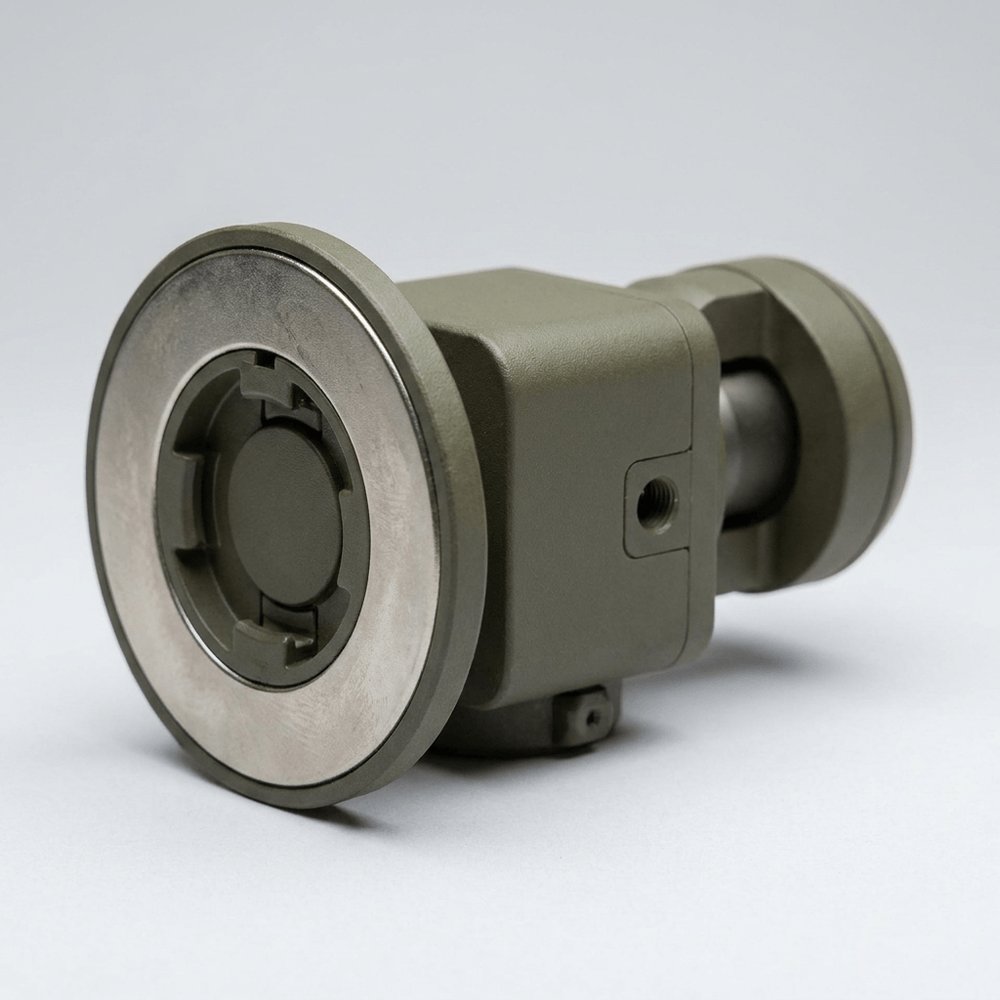
Swappable pad
Operator-selected before flight to match the surface. Magnet for ferrous steel, spring barbs for tree bark, adhesive for concrete and masonry.
A drone-emplaced, RF-silent, fiber-tethered sensor for watching a fixed position. The drone comes home. The sensor stays where you need it.
Always powered, always loud, always stuck on station. The drone is used keeping one sensor in the air.
A jam-proof link, but the whole drone is spent on impact — one mission, one drone.
The drone flies home and leaves a reusable sensor behind. The node is the only thing you leave on station.
Configure the node on the ground for the surface and the mission, then let the drone place it.
Operator-selected before flight to match the surface. Magnet for ferrous steel, spring barbs for tree bark, adhesive for concrete and masonry.
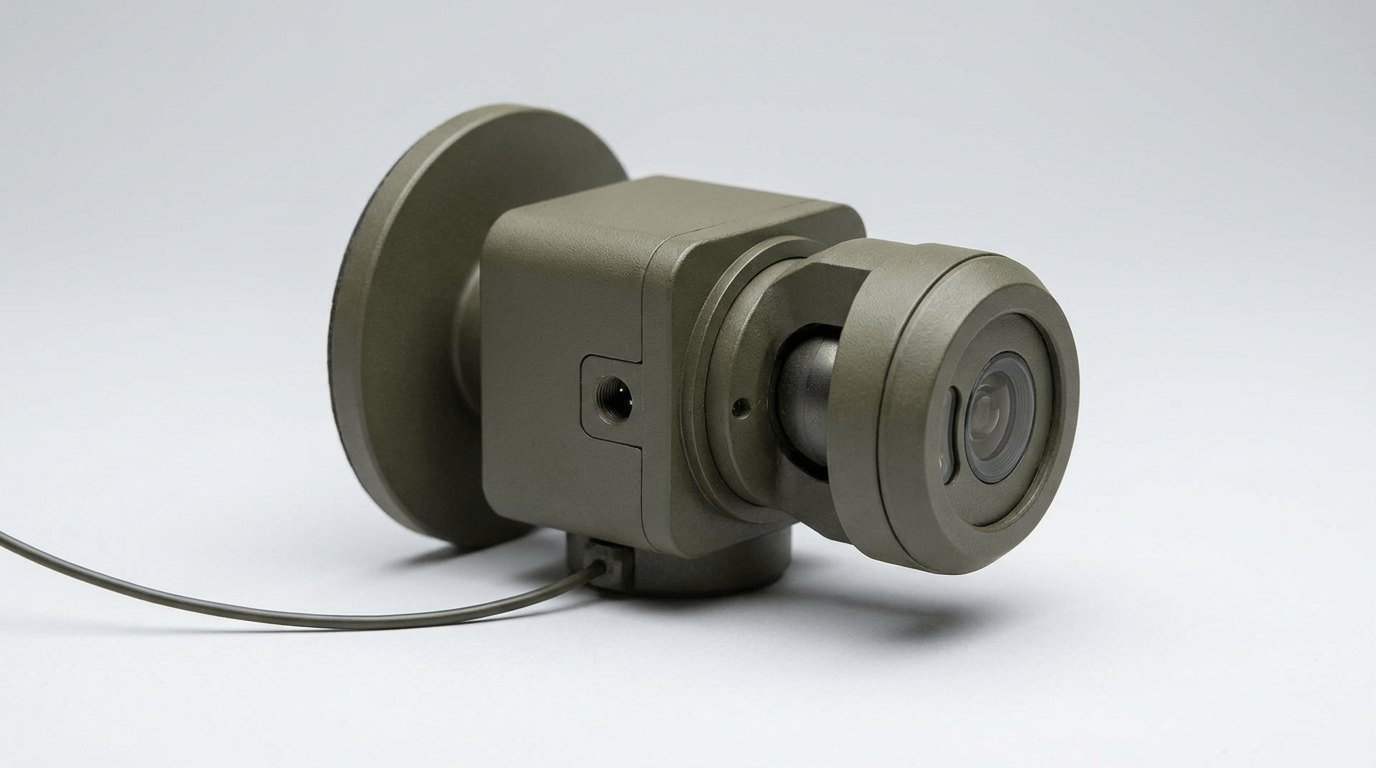
Two-axis spherical joint for aiming, onboard battery, a peak-shaving supercapacitor, and an exposed power socket for optional external power.
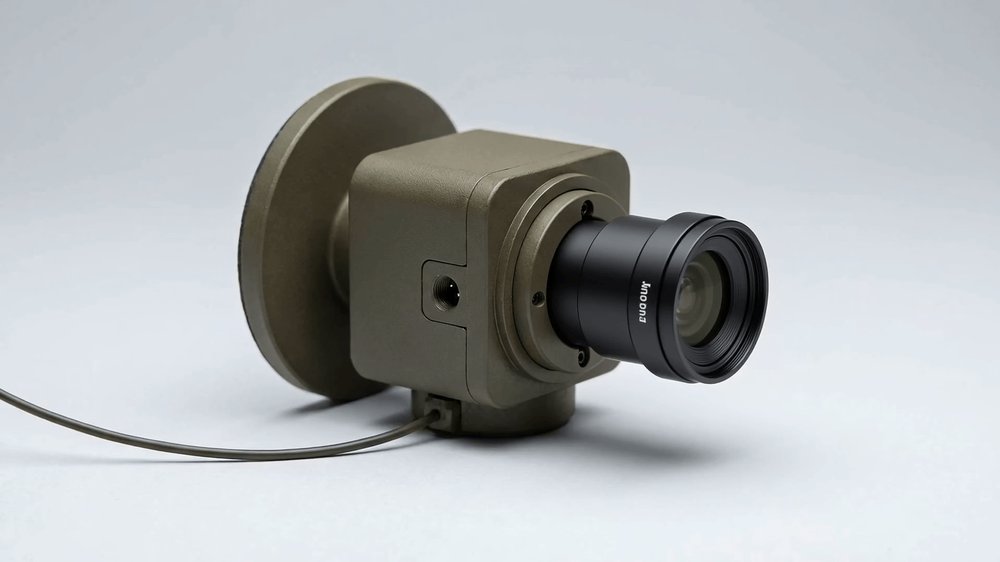
Pick the sensor for the mission — optical, acoustic, seismic, radiation, or chemical — mounted on the aiming joint.
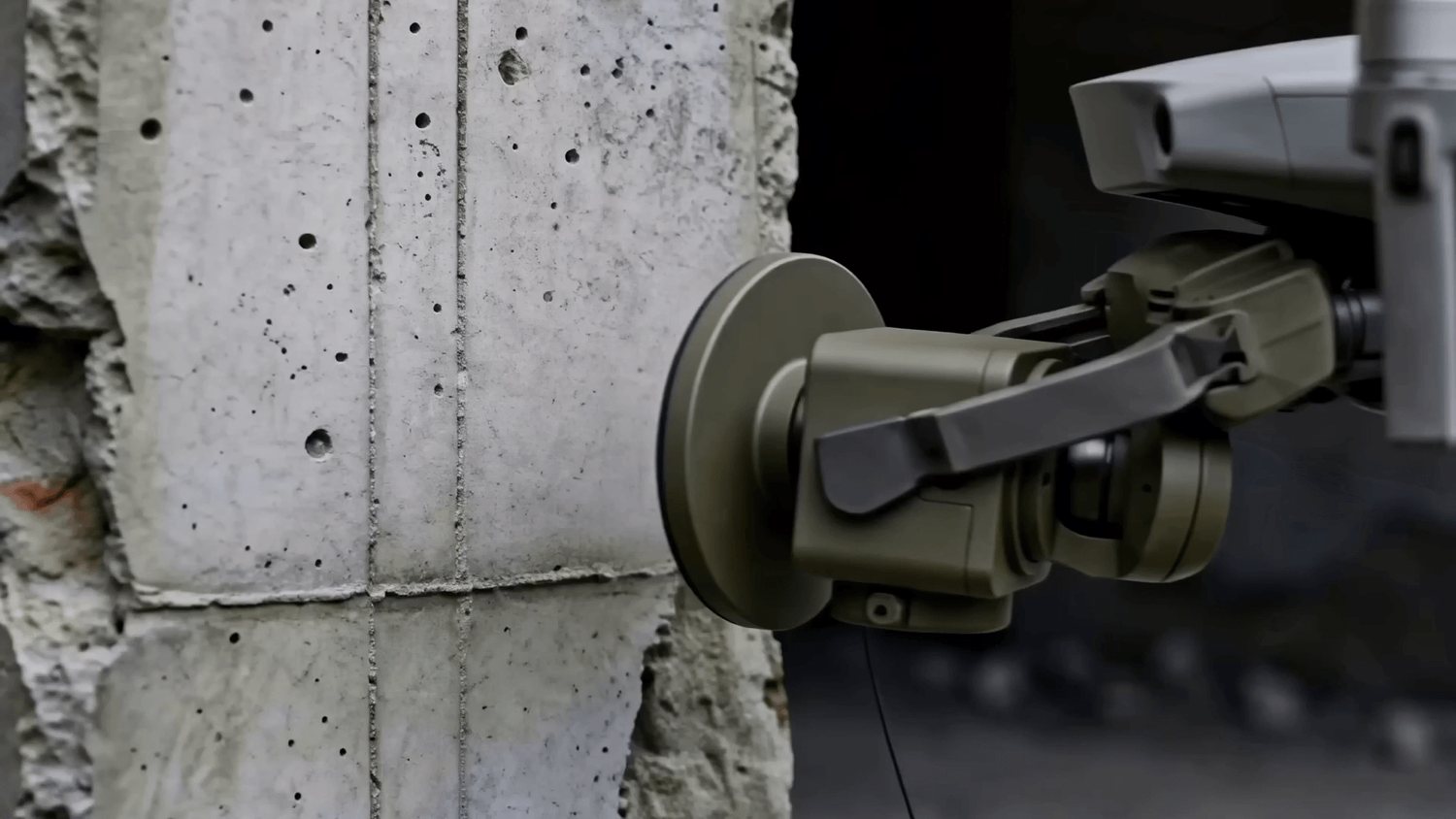 Emplacement · pad to surface
The drone carries the node to the mount point and presses the pad against the surface.
Props torque the node on its spherical joint while the operator centers the live feed through the fiber.
The spring-loaded clamp is free under tension and rigidly fixed the instant the drone lets go.
The drone retreats, paying out fiber the whole way, then hands the line off at the watched position.
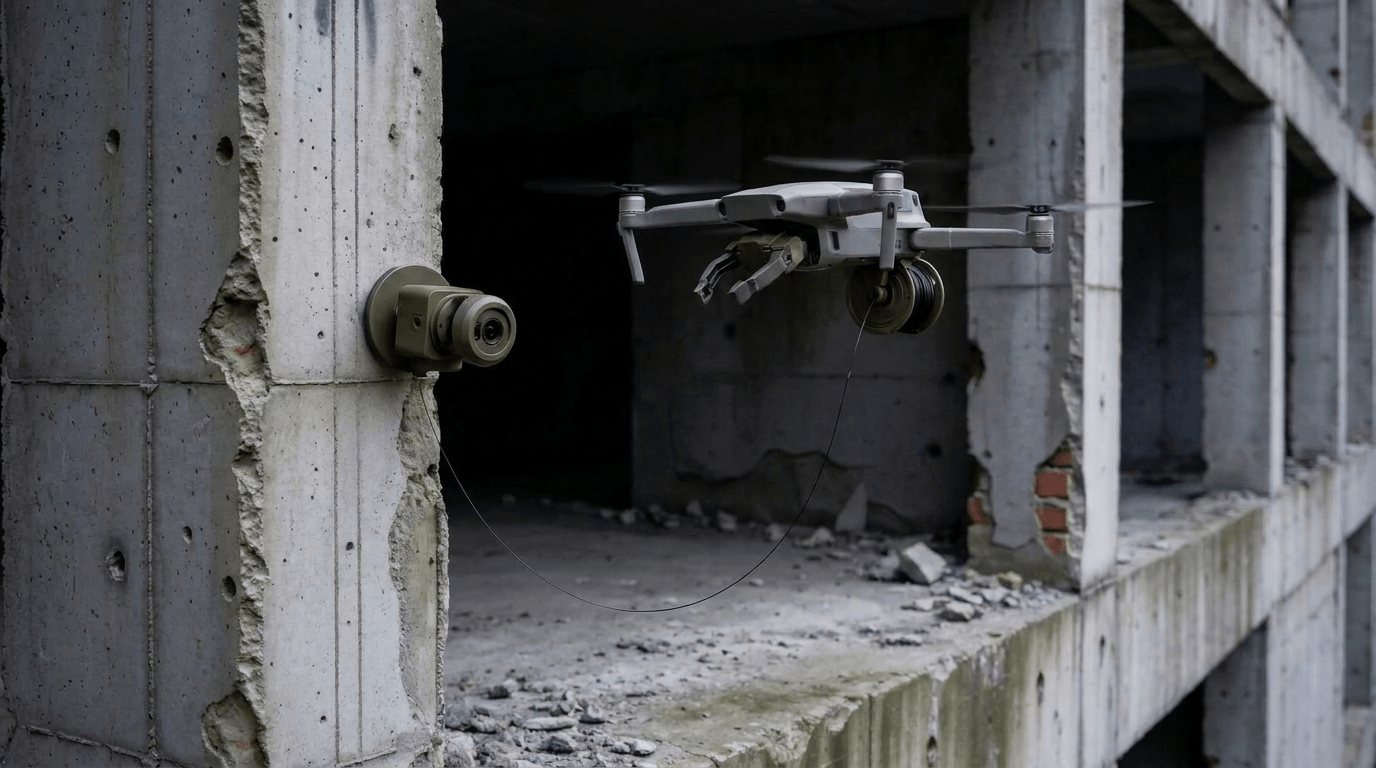 Emplaced · node on station
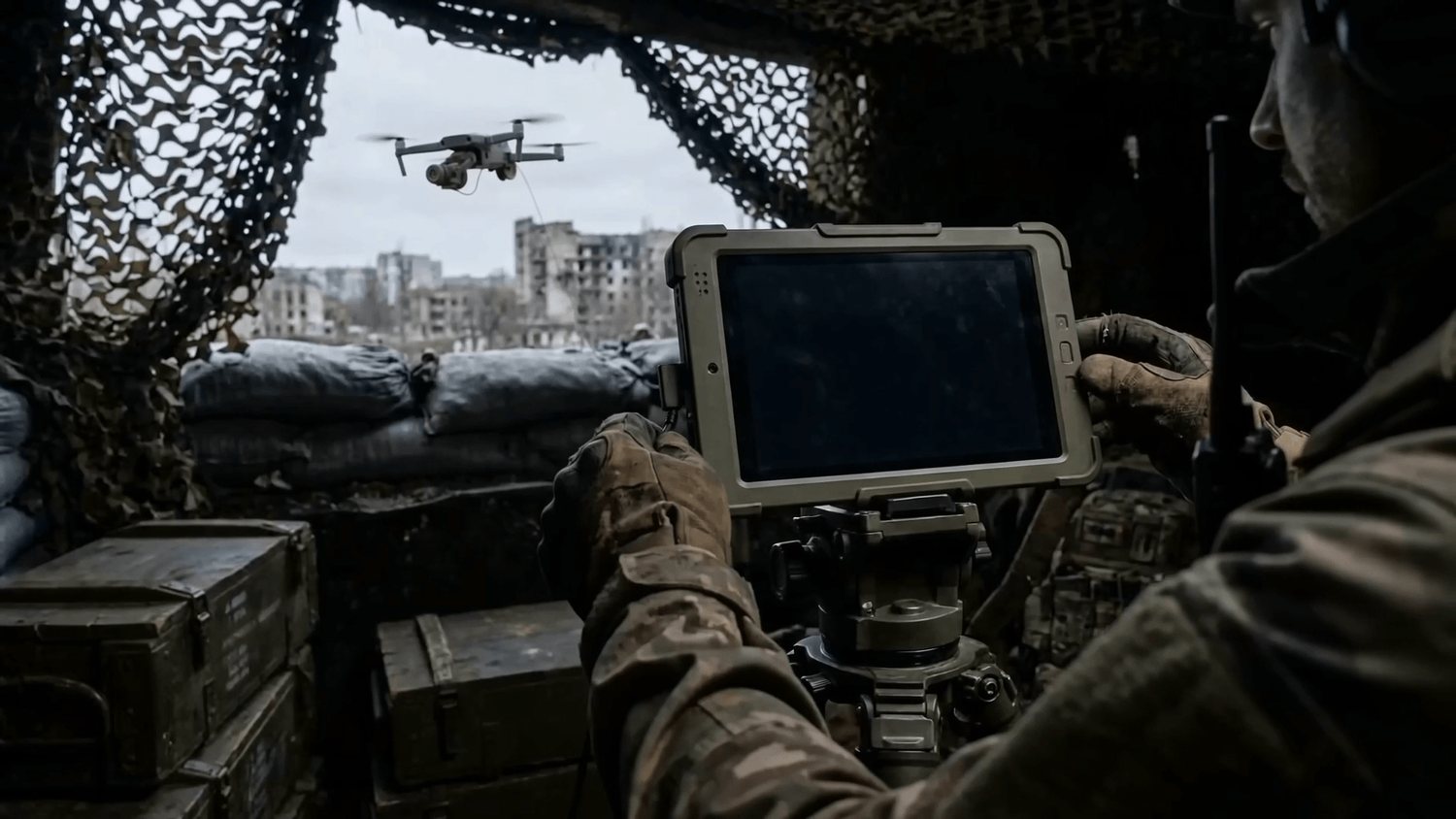
Every node reports into one operator console and from there to the main command center: live feeds, detections, node health and battery, and the map of what you're watching. Emplace, aim, and monitor from behind cover.
Request a briefing on Pitapod-1 and the Tyzentec operating software.