
Surface-attachment interface
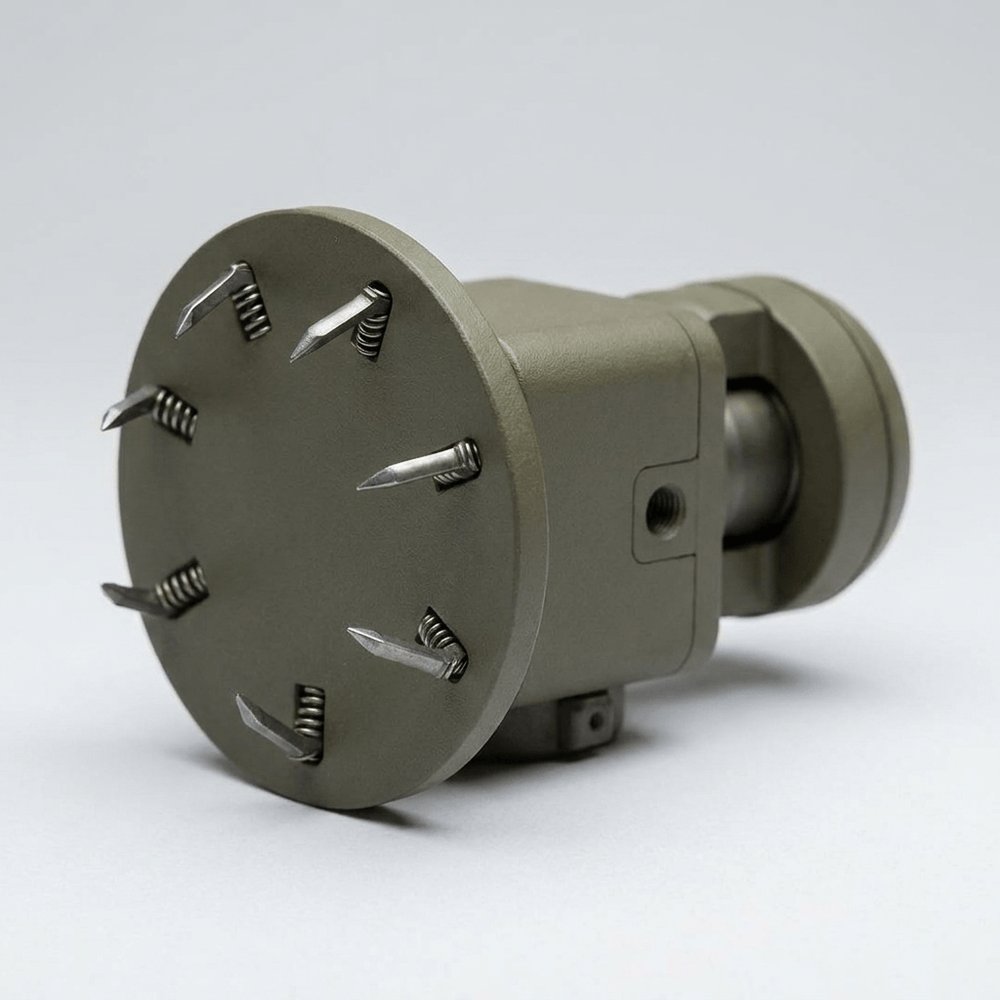
Operator-selected before flight to match the target surface — magnet, adhesive, or spring barbs. See the options below.
A drone-emplaced, RF-silent, fiber-tethered persistent sensor for defending and watching fixed positions. The drone is reusable. The emplaced node is disposable.
A swappable pad, the node body, and a swappable sensor. Configure it on the ground; the drone places it.
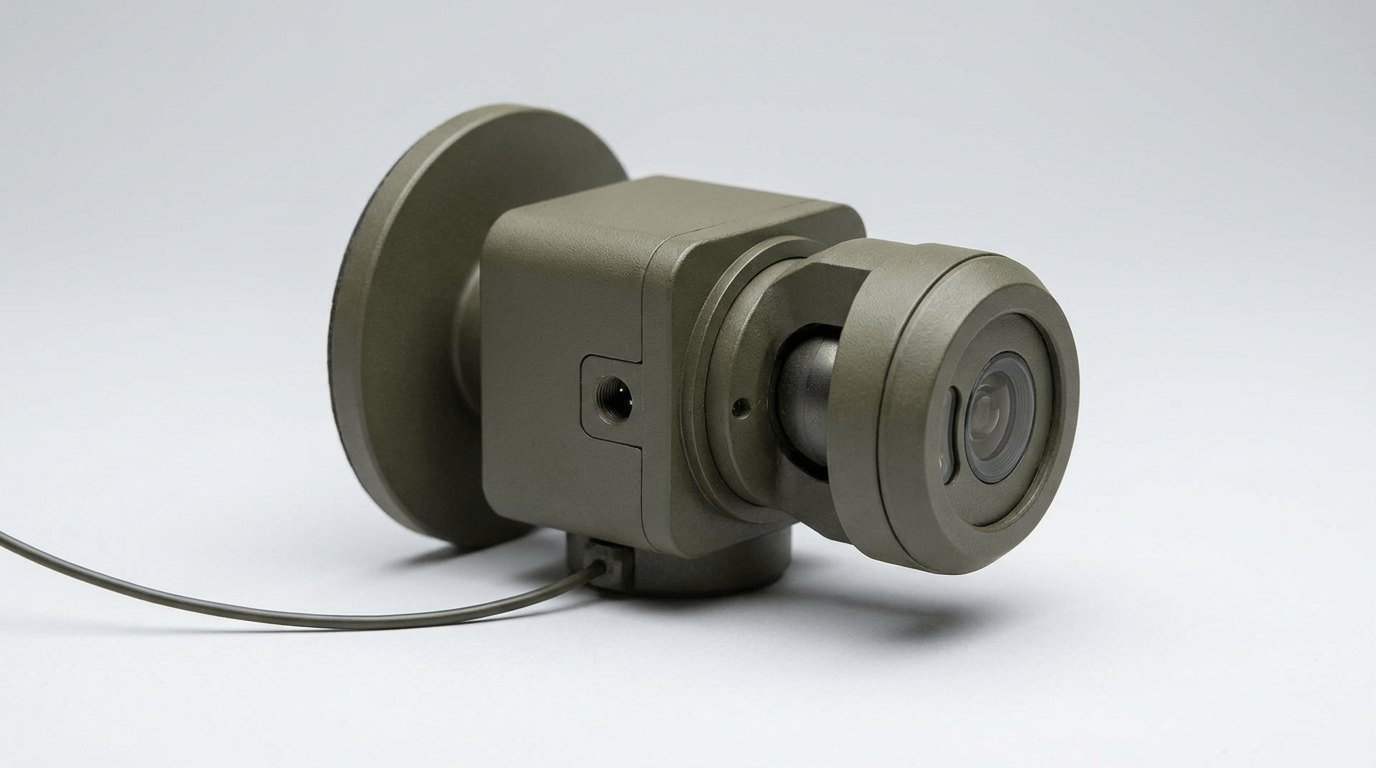 Assembled · node
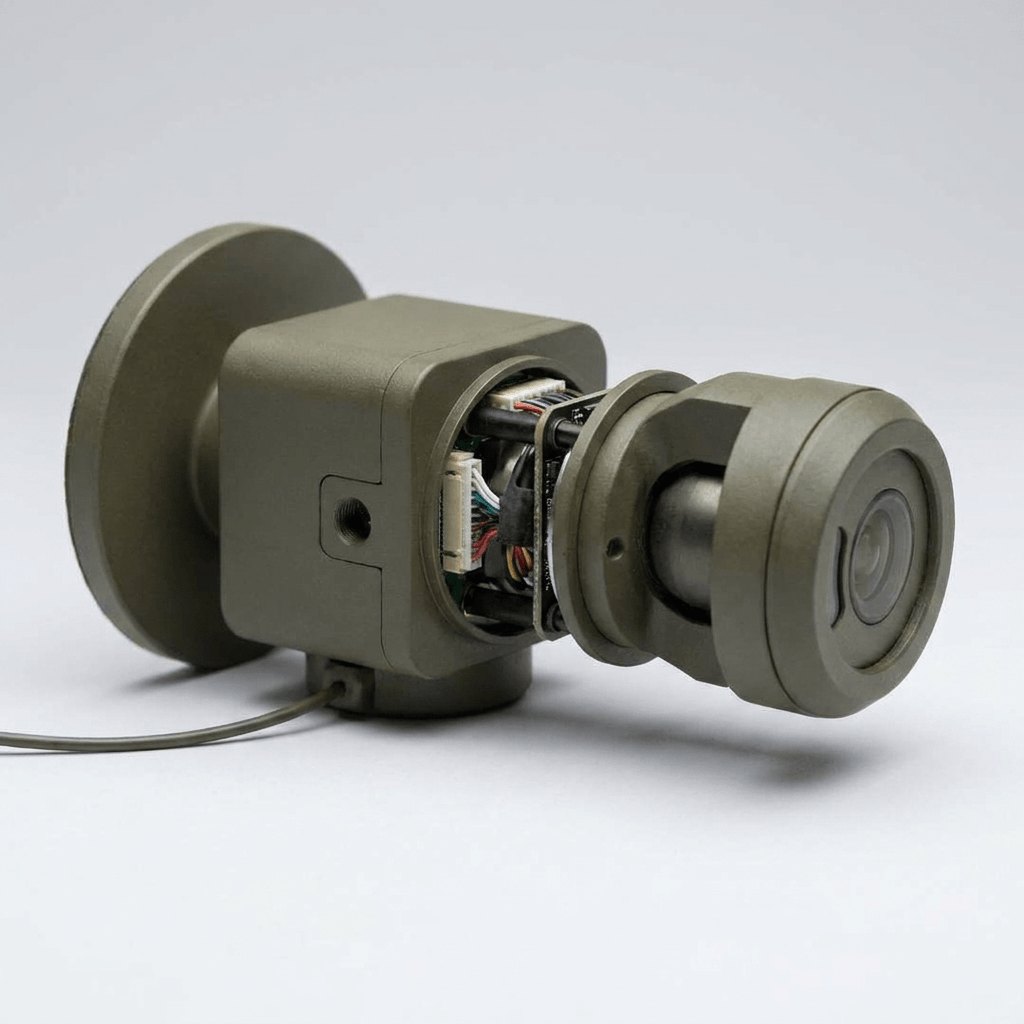 Exploded · pad · body · sensor
Operator-selected before flight to match the target surface — magnet, adhesive, or spring barbs. See the options below.
Carries the aiming and power hardware that make the node reusable in place.
Mounted on the aiming joint. Optical, acoustic, seismic, radiation, or chemical.
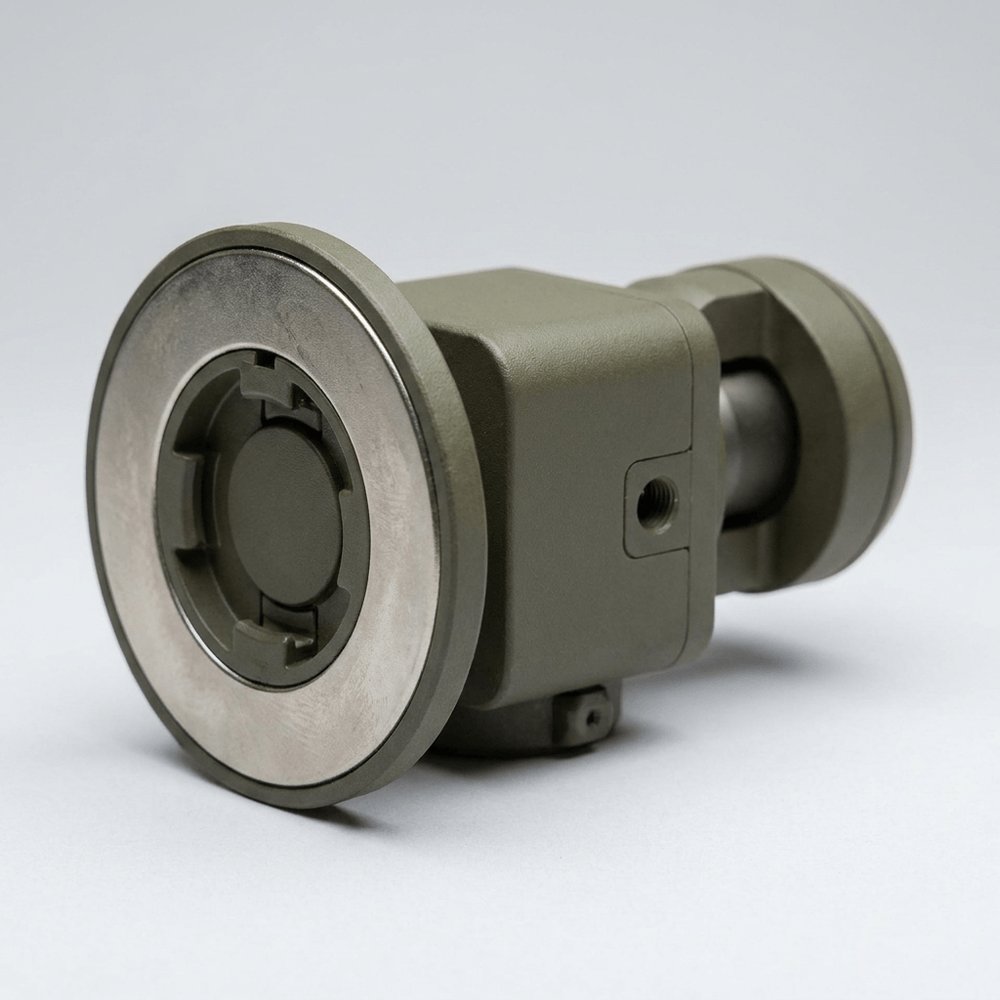
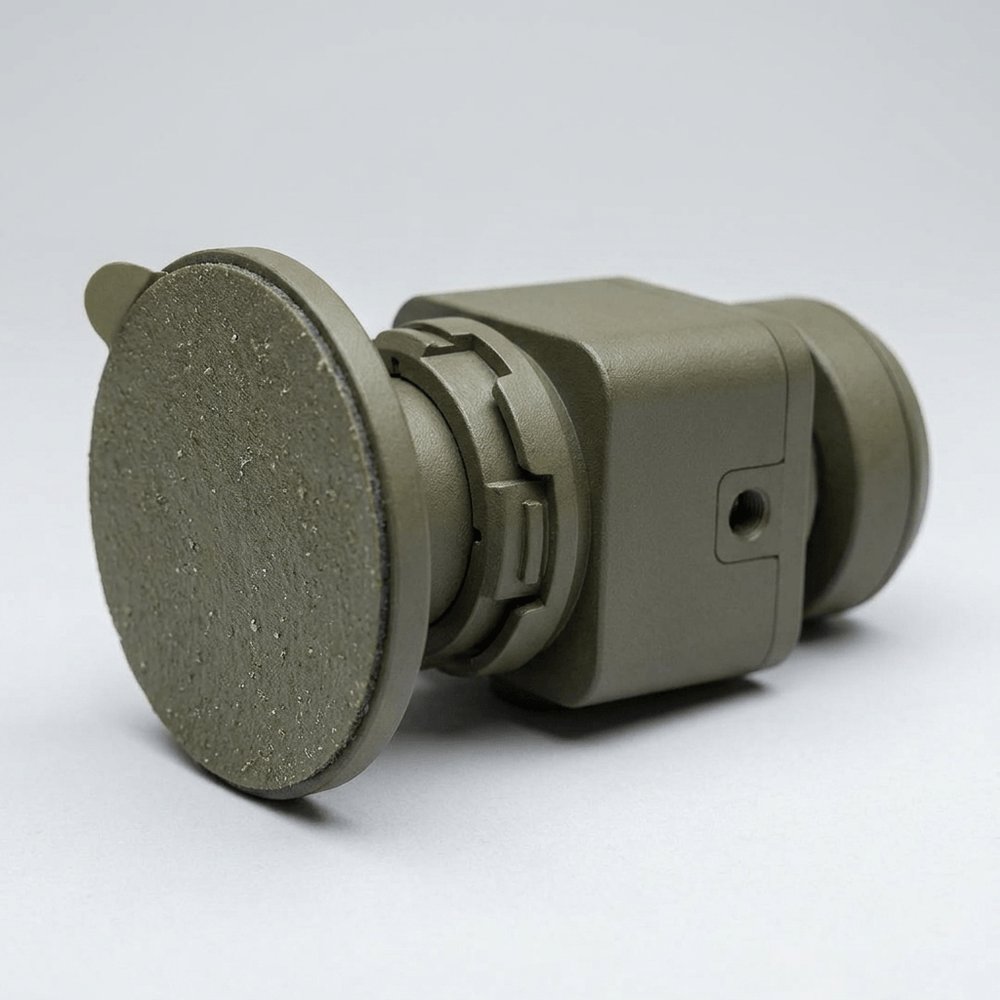
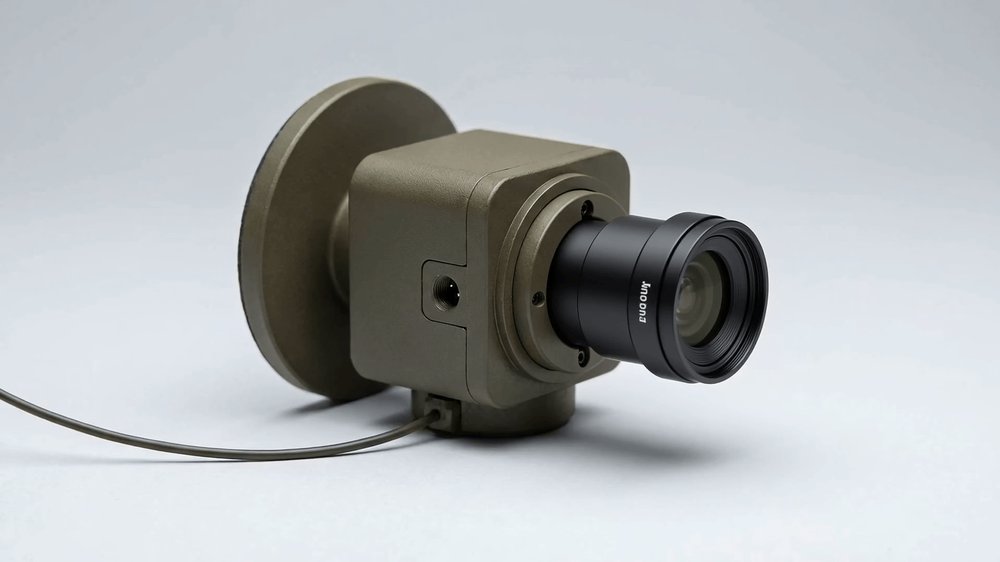
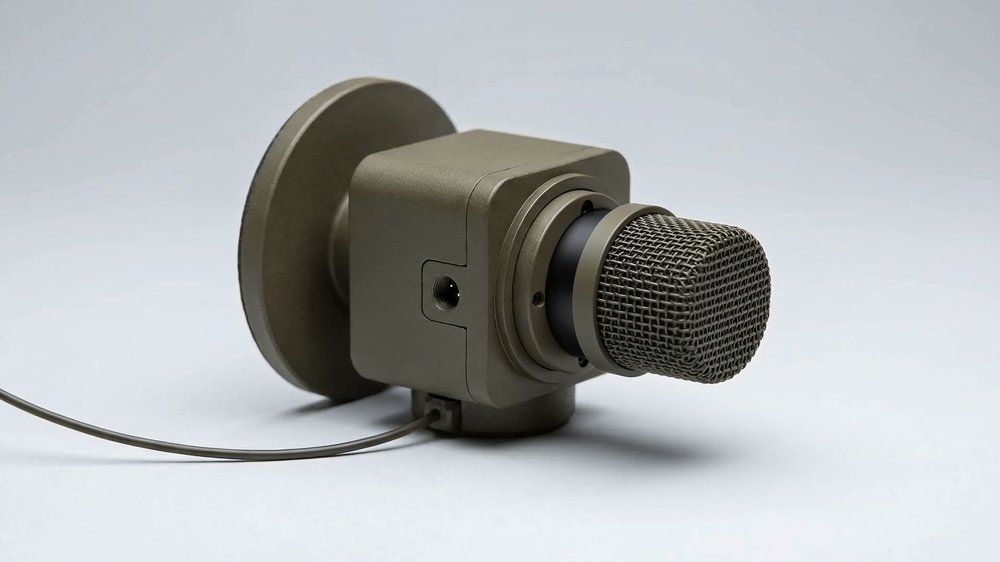
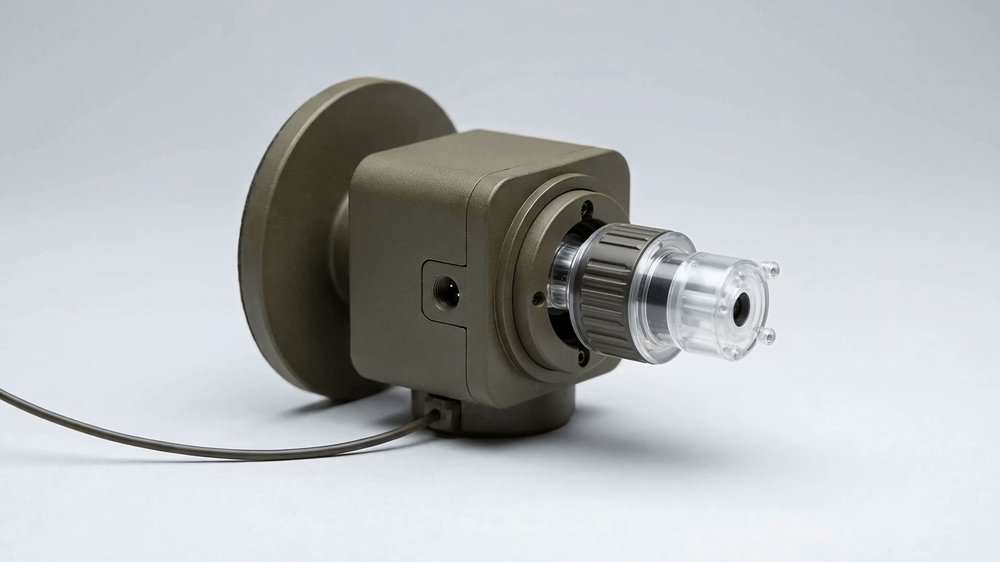
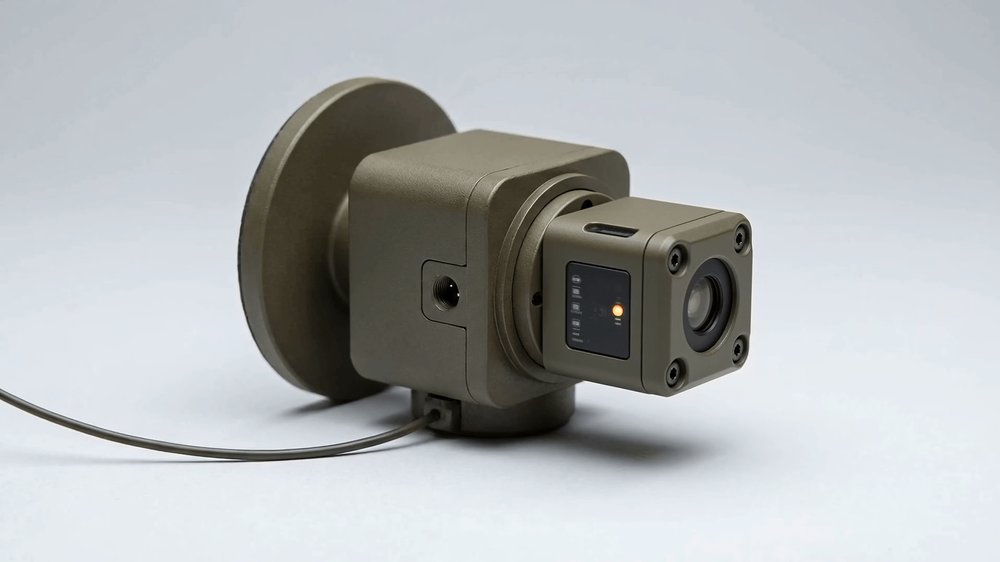
The drone carries the assembled node — pad, body, and mission sensor — to the mount point and presses the pad against the surface to attach it.
Using its propellers, the drone torques the node on its two-axis spherical joint, aiming the sensor while the operator watches the live feed through the fiber the drone is holding.
When aim is correct, the joint locks on release. A spring-loaded clamp stays free while the drone applies tension, and locks in place when the drone detaches.
The drone flies home, spooling fiber the whole way. At the far end the fiber is taken from the drone and connected at the watched position.
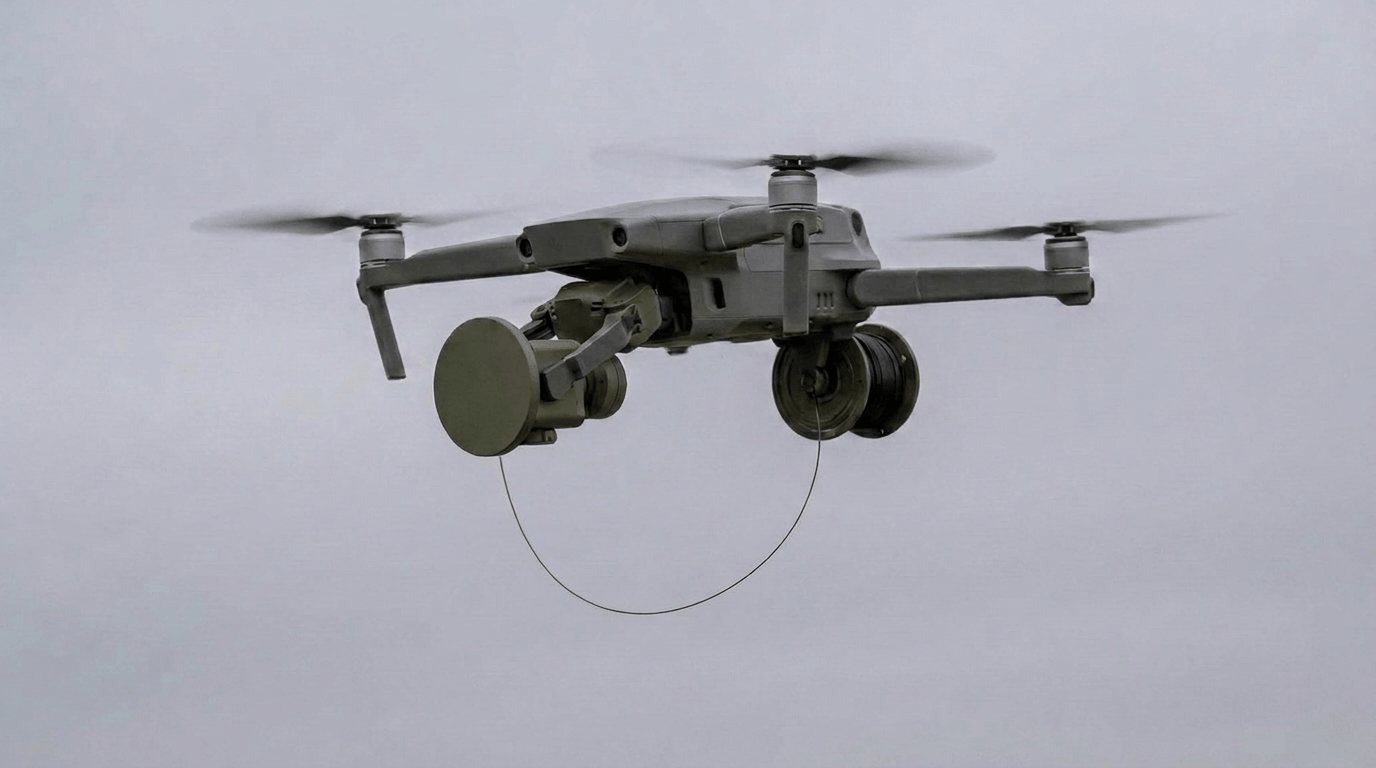 Transit · node under drone
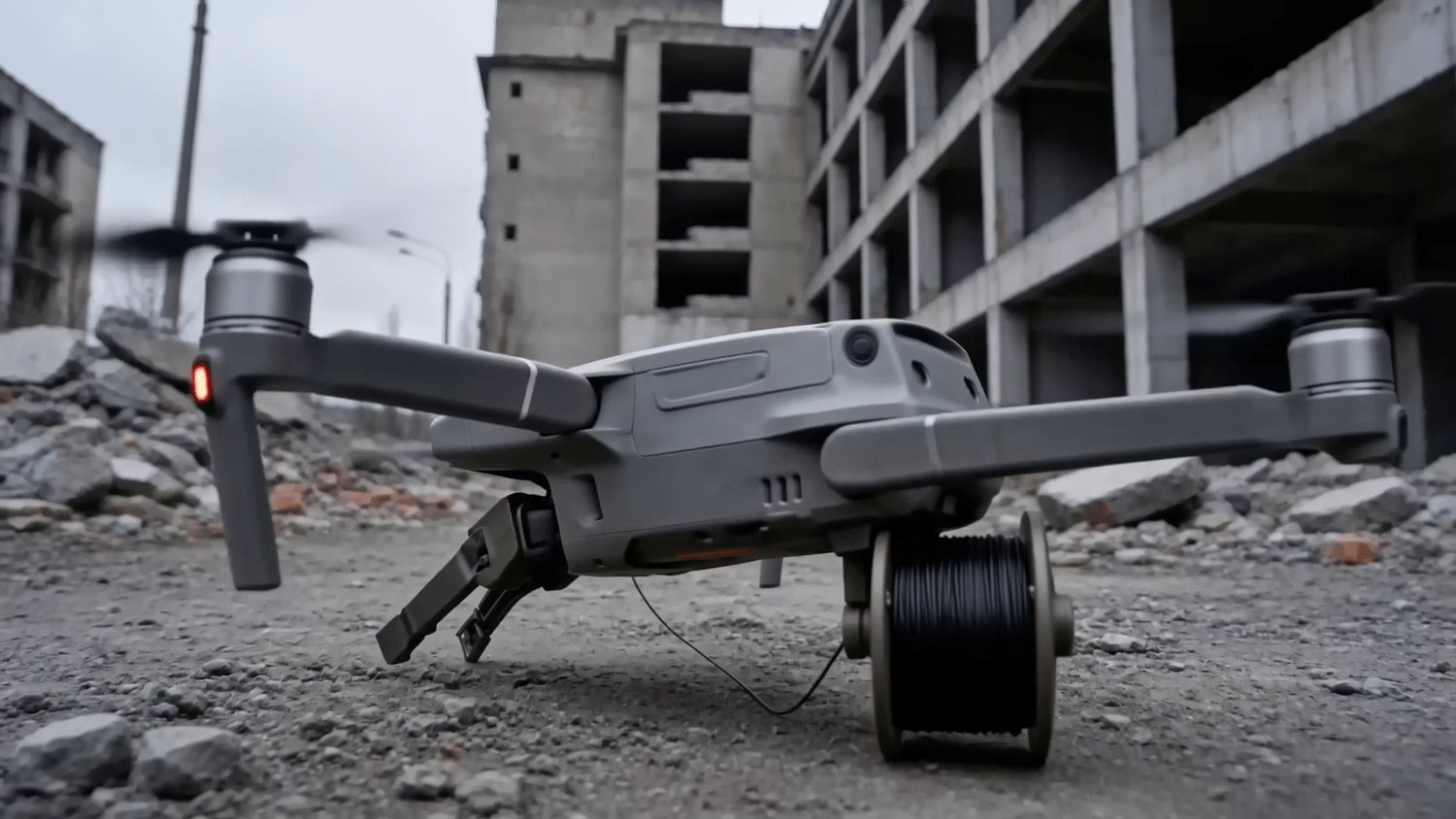 Reusable · drone recovered
The node runs on its onboard battery, duty-cycled: sleep, wake on trigger or schedule, capture, burst the data out over fiber, sleep again. Average draw is low, so endurance is days-to-weeks per emplacement rather than continuous.
The supercapacitor covers capture and transmit current peaks. An exposed socket accepts an optional copper lead for external or continuous power when an emplacement warrants it — and leaves the door open to trickle-recharging over the fiber during idle periods.
The baseline build carries data only — ordinary telecom fiber, standard optics, gigabits of headroom. No power-over-fiber, no fiber-fuse risk, no thermal or eye-safety problem at a cut.
Fiber gives an inherently jam-proof, RF-silent link over the roughly one-kilometer run. It defeats RF SIGINT and EW — with the honest caveat that the node is still a small visible object on a findable, cuttable line, and the emplacing drone is audible during install.
A rugged field tablet shows the live feed and detections from the node — powered from the node's own battery, or indefinitely on external power.
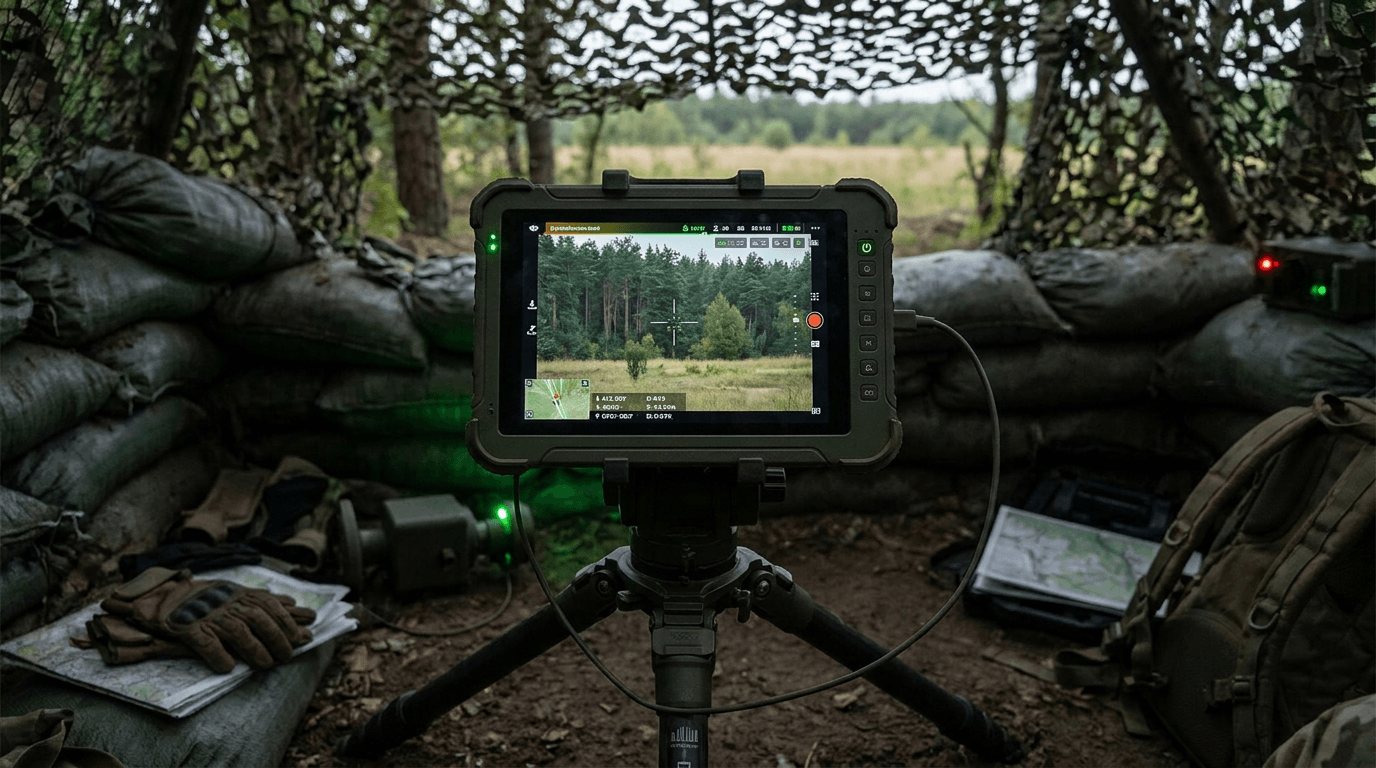 Operator console · live feed
Three feasibility risks remain and are the focus of prototyping. We name them plainly.
A drone is a weak, unstable force applicator. Low-clamp-pressure instant bonds on bark or weathered concrete are the materials weak point on vertical, rough surfaces.
The passive lock-on-release joint has to work as a precision mechanism — on a part that is meant to be thrown away.
Long-term survival of a ground-run fiber against snag and cut over the length of an emplacement.
Request a briefing on Pitapod-1 and the Tyzentec operating software.